
Museum Topics: Darlington Corporation Transport: The End of Crew Operation
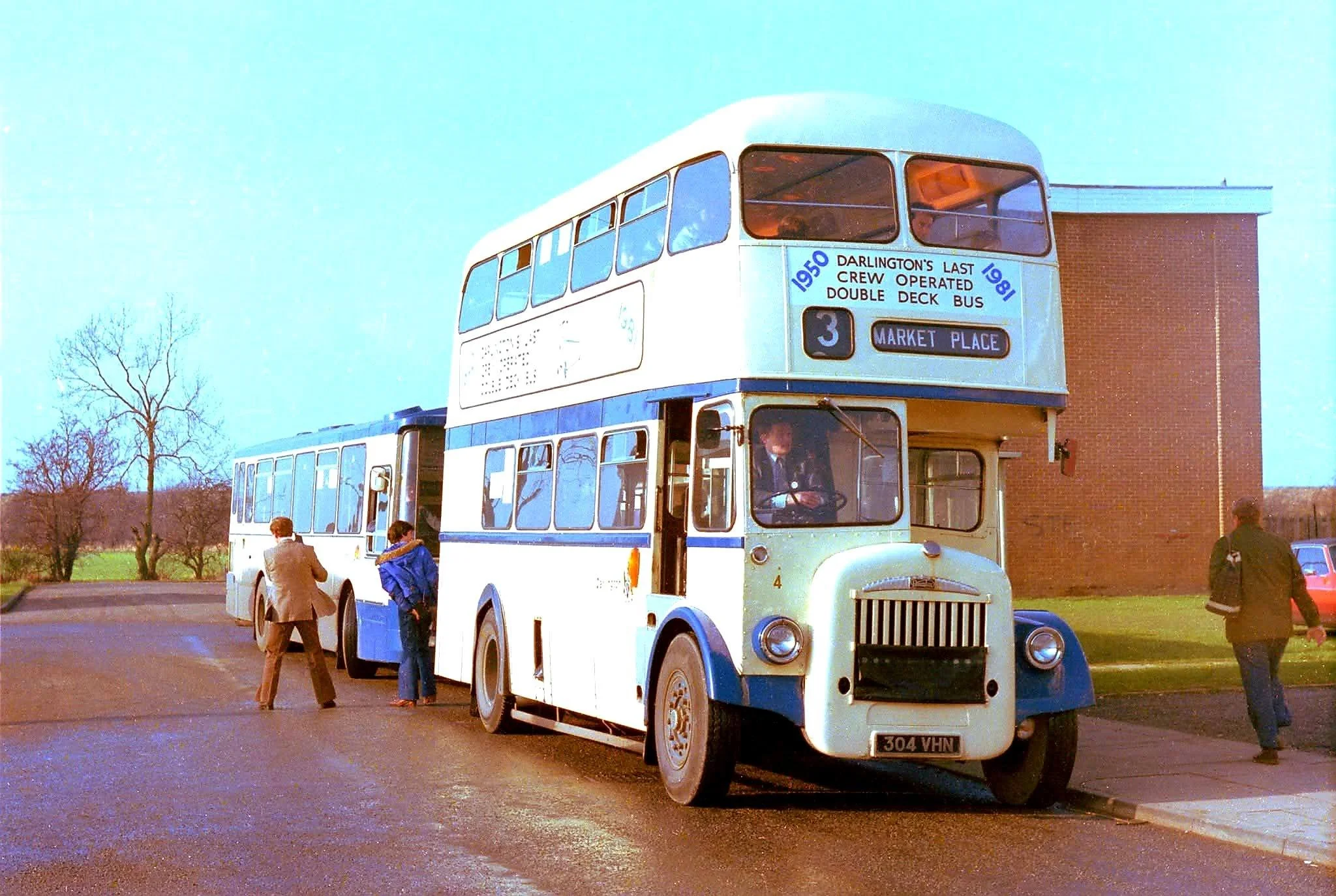
Daimler CCG5 304 VHN awaiting to leave for the last time on town service.
Museum Topics:
Darlington Corporation Transport: The End of Crew Operation
Darlington Corporation Transport was one of many municipal bus undertakings that played a vital role in shaping public transport across Britain during the twentieth century. Established in 1903, the undertaking originally operated tram services, reflecting the rapid urban growth and industrial development of Darlington at the turn of the century. These early tramways laid the foundations for what would later become a well-regarded municipal bus operation, closely aligned with the needs of the local community.
By the 1930s, Darlington Corporation began the transition from trams to motor buses, a move driven by flexibility, lower infrastructure costs, and changing travel patterns. The bus fleet expanded steadily through the inter-war and post-war years, with double-deck vehicles forming the backbone of services on the town’s busiest routes. As a municipal undertaking, Darlington Corporation Transport was directly accountable to the local authority, meaning service reliability, fare affordability, and local employment were key priorities.
One of the defining features of Darlington Corporation’s operation was the continued use of crew-operated double-deck buses. This traditional operating model employed both a driver and a conductor, the latter responsible for collecting fares, assisting passengers, and maintaining order on board. For decades, conductors were a familiar and reassuring presence, particularly for elderly passengers, schoolchildren, and those unfamiliar with the network.
Among the vehicles most closely associated with this era were the Daimler CCG5 double-deckers. Introduced in the post-war period, these buses were robust, reliable, and well suited to urban operation. Their Gardner engines, traditional chassis design, and practical bodywork made them popular with both operators and crews. Daimler CCG5 No. 4 became especially significant in Darlington’s transport history.
By the 1970s, however, the economics of bus operation were changing rapidly. Rising labour costs, declining passenger numbers, and national policy shifts encouraged operators to adopt one-person operation (OPO), eliminating the conductor’s role. Across the country, municipal undertakings gradually phased out crew-operated vehicles in favour of more modern designs with front entrances and driver-controlled fare collection.
This transition reached a symbolic conclusion in Darlington on 31 January 1981, when Daimler CCG5 No. 4 operated the town’s final crew-operated double-deck service. The occasion marked the end of nearly eight decades of traditional municipal bus operation in the town. While services continued, the withdrawal of crew operation represented a profound change in the character of local bus travel.
Today, Darlington Corporation Transport is remembered as a proud example of municipal ownership and community-focused service. The final run of Daimler CCG5 No. 4 stands as an important moment in transport history, illustrating wider national trends while capturing the end of a distinctive and much-loved era in Darlington’s streets.