Museum Stories: Ian Robinson
Museum Stories: Ian Robinson
Ian Robinson’s connection with the bus industry runs deep, shaped by childhood memories, family ties, and more than two decades behind the wheel. What began as a short-term plan became, as it so often does in this industry, a lifelong vocation.
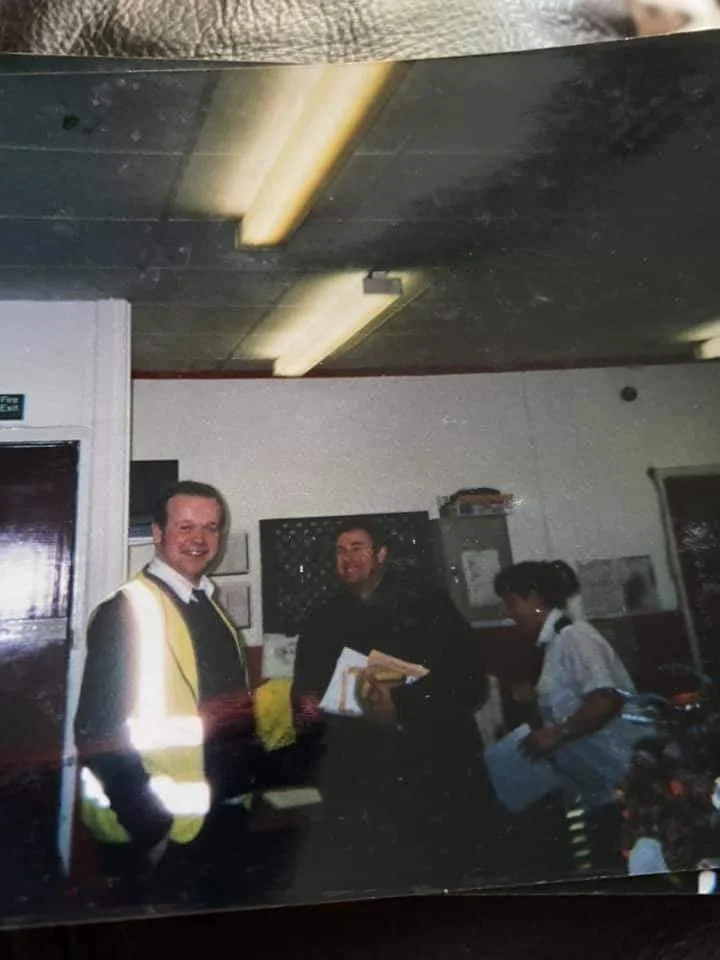
Ian joined the bus industry in 2002, passing his driving test at just 21 years old. Like many before him, he initially expected to stay only a couple of years before moving on. Instead, the industry took hold. Time passed quickly, friendships were forged, and before he knew it, buses had become an inseparable part of his life.
His earliest memories are as a passenger. Growing up, Ian regularly travelled by bus from Spennymoor to Kirk Merrington, and on the Number 6 between Bishop Auckland and Spennymoor whenever his father was driving. His dad was a United driver based at Bishop Auckland, and it was through him that Ian was first introduced to the magic of the depot and the romance of long-distance coach work.
Summer-only coach turns left a particularly lasting impression. Operated with dual-purpose Leyland Tigers, these services were, in Ian’s words, “simply superb vehicles.” His favourite of the Bishop-based Tigers was fleet number 1302. From a young age, Ian travelled aboard these coaches to Bridlington, Scarborough, Whitby and Blackpool on a mixture of private hires and Yorkshire Coast Link services. He vividly remembers early mornings at Bishop Auckland depot, alive with the noise, fumes and activity as Nationals and LHs were coaxed back into life. While his dad carried out daily checks, Ian would be settled aboard the coach, waiting for another adventure to begin.
Those childhood journeys planted the seed for a driving career of his own.
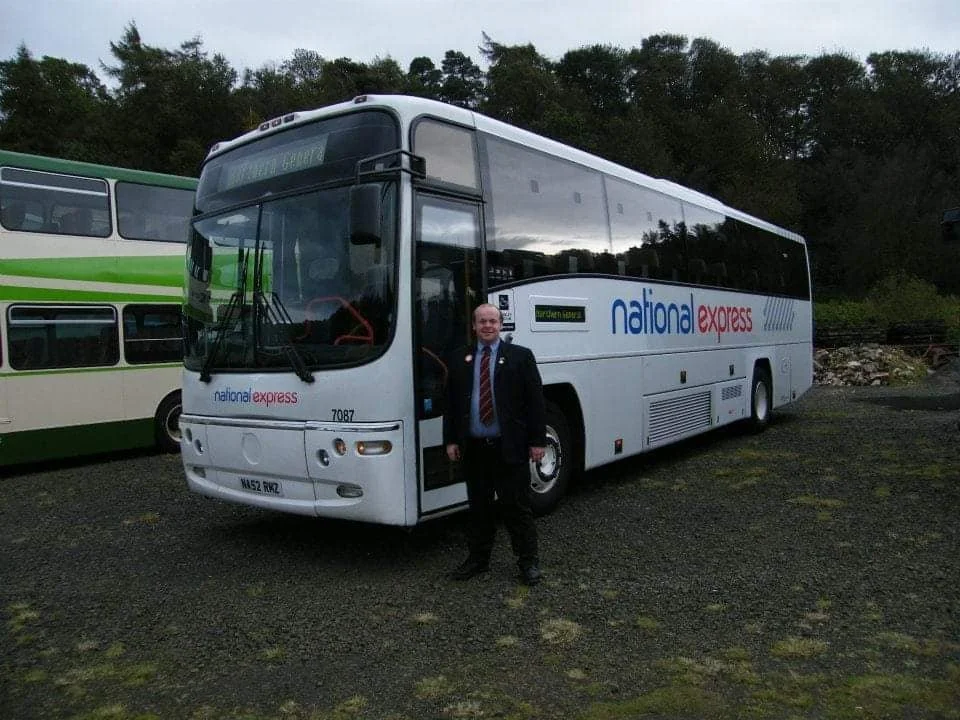
Looking back as a driver, several routes stand out. From his time on National Express, one service in particular remains unforgettable: the 304 from Liverpool to Weymouth. Operated by Go Northern from Chester-le-Street, the duty included overnight stays in Liverpool’s Adelphi Hotel and a night in Weymouth. Departing Liverpool at 07:20, the route passed through the Mersey Tunnel—where Ian grew to appreciate the distinctive sound of the mid-engined Volvo B12Ms—before heading via Chester, Shropshire and Birmingham. After a break there, the journey continued down the M40 (which Ian firmly considers the most boring motorway in the UK), onward to Oxford with its notoriously tight coach station, and then south via the A34, a road he loved driving. Calls followed at Southampton, Ringwood and Bournemouth, before the final run through Poole, Dorchester and into Weymouth.
While the scenery was memorable, what truly made the route special were the people. Station staff along the way were friendly and welcoming, and many remain friends more than a decade later. Evenings in Weymouth were spent exploring local pubs before a well-earned rest at the B&B.
Earlier in his career, Ian worked Go Northern’s service 684, a route that appealed both for the scenery and the vehicles. At the time it was operated by ex-OK Travel Optare Deltas—buses Ian loved to drive. His favourite was J207 VHN, remembered for its speed, comfort and excellent brakes. The route ran from Eldon Square, past St James’ Park and the General Hospital, along the West Road and through Denton Burn, Throckley and Heddon-on-the-Wall, where views across the Tyne Valley opened up before heading into Northumberland, Wylam, Ovingham and Ovington.
The light runs over the A68 brought unforgettable sights: a snow cloud visibly depositing its load on a hillside near Consett, and a dramatic encounter with a dense fog bank that appeared almost solid. On one particularly eventful evening, a Delta breakdown resulted in Ian being given Leyland National 4672—the last of its kind still in service. A lifelong National fan, Ian relished the unexpected opportunity, even if it came with a heart-stopping lesson in fog and reduced visibility.
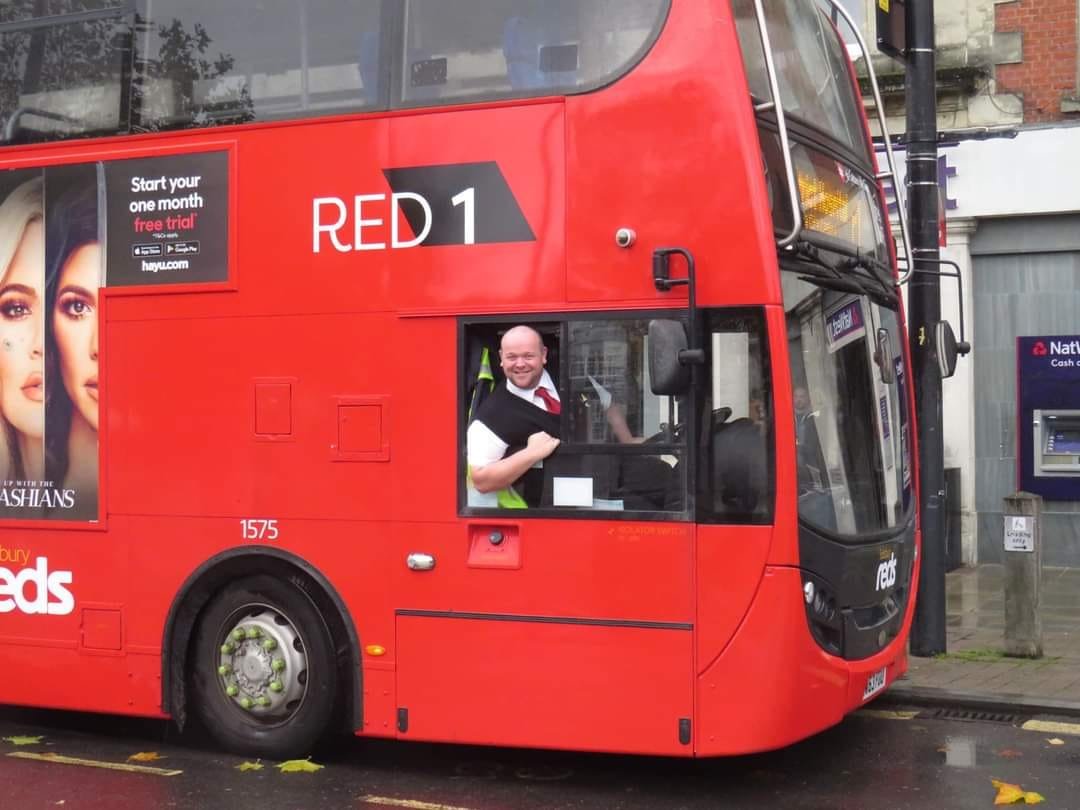
From his time in the south, Salisbury Reds’ Activ8 service between Salisbury and Andover also stands out. Crossing Salisbury Plain, the route passed military towns and equipment, offering a fascinating change of scenery. One moment remains especially vivid: while in Tidworth, Ian heard a Chinook helicopter nearby. Rounding a corner by some playing fields, it suddenly appeared, lifting off and passing overhead at no more than fifty feet—an unforgettable sight.
Over more than 20 years, Ian has worked alongside countless colleagues—far too many to name—but it has always been the people that made the job. He met his wife through the bus industry too, on the Number 8 service between Bishop Auckland and Barnard Castle, which she used to catch to work.
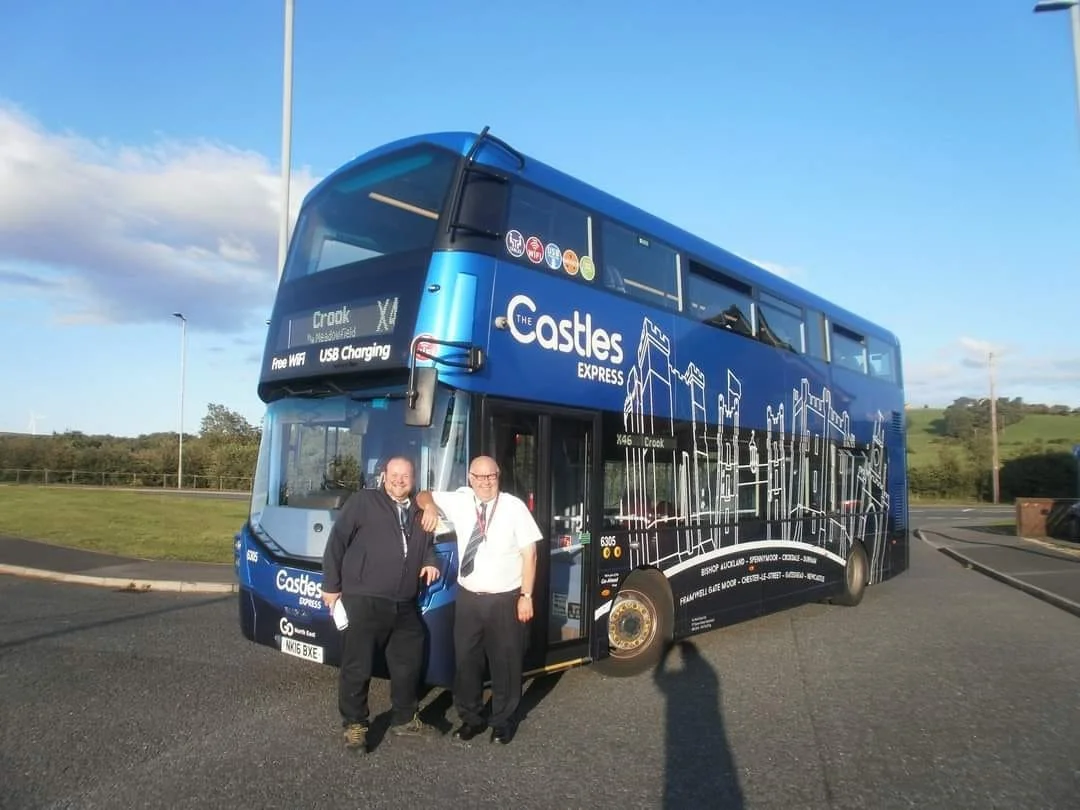
Like many drivers, Ian fondly recalls the camaraderie, humour and practical jokes of garage life—antics that would never be tolerated in today’s more corporate, regulated environment. National Express work could be lonely, particularly during long layovers away from home, which led Ian to indulge his other passions: railways and photography. Returning to service work at Crook outstation brought a renewed sense of community, with shared breaks at Bishop Auckland bus station and memorable banter between Go North East and Arriva staff, including the much-missed Steven Foster.
Reflecting on how buses have changed, Ian misses the people most of all. He was fortunate to work with drivers from his father’s era—true bus and coach men and women who knew how to get the job done with minimal fuss. Today’s industry, he feels, too often underestimates drivers, restricting responsibility and discouraging the practical skills that once defined the profession.
Ian Robinson’s story is one of continuity—of generations, vehicles, routes and friendships—all bound together by a lifelong love of buses and the people who make the industry what it is.