
Museum Stories: Stu Gray
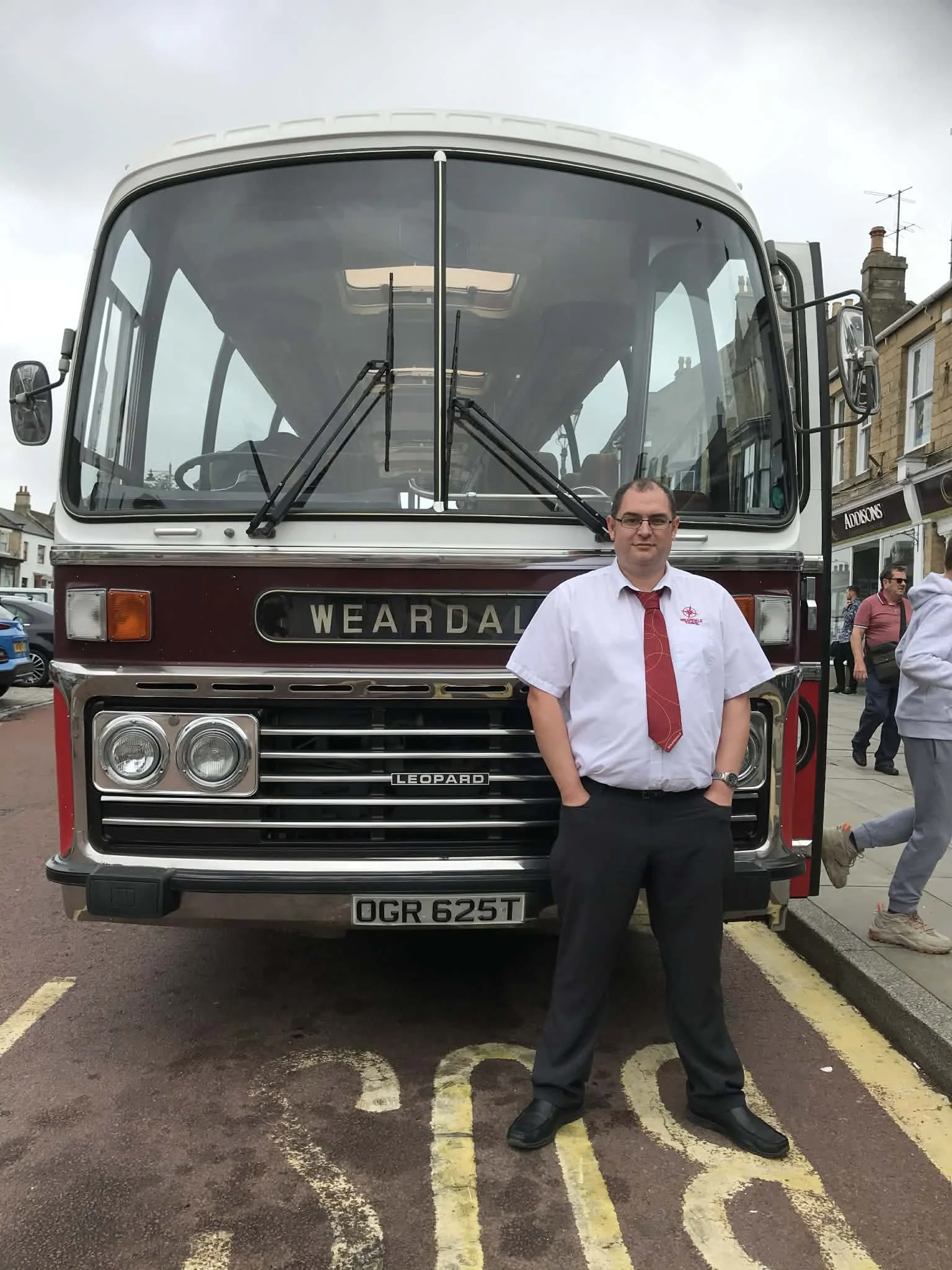
Museum Stories: Stu Gray
From the sound of a Bristol RE “barking” up a Durham hill to the quiet hum of modern buses shaping today’s networks, Stu Gray’s life has been inseparably linked with buses. His story is not just about vehicles and routes, but about community, friendship, pride and a lifelong passion that turned a childhood fascination into a career.
Stu’s connection with buses began long before he ever sat in the driver’s seat. Growing up in a household without a car, buses were not a novelty but a necessity. They were how he got to school, visited family, and explored the world beyond his doorstep. United and The Eden were familiar names, with trips on TMS buses to see relatives in Trimdon, Scarlet Band on school swimming trips, and Gardiners when visiting his nan. These journeys embedded buses into everyday life, making them part of his personal geography and memory.
Some routes left a particularly deep impression. United routes 2, 3 and 15, along with The Eden’s 99, were regular companions in his youth. Decades later, Stu would find himself not just riding these services, but driving them and their later variations – a rare and powerful example of how the industry connects generations of experience.
People mattered just as much as vehicles. One figure stands out above all others: the late Steve Foster, a legendary driver with The Eden. Meeting as a teenager, Steve became a mentor and a guiding influence, taking Stu under his wing. Their bond grew into something closer to family, and Steve’s impact remains profound. He is remembered with affection and respect, not only by Stu but by everyone who knew him.
Like many transport stories, this one also includes romance. Stu met his wife at an Arriva staff Christmas party in Bishop Auckland. She had come along with her brother-in-law, and more than two decades later they are still together – proof that buses have always been about bringing people together, sometimes in unexpected ways.
The garages and depots were places of humour, mischief and, above all, camaraderie. At Bishop Auckland depot, Stu learned from colleagues with decades of experience. Their willingness to share knowledge shaped him both professionally and personally, and he remains deeply grateful for that environment of mutual support and respect.
Although he considers himself younger than some contributors to the Memory Vault, Stu’s memories stretch back as far as he can remember. He vividly recalls United buses passing his house every hour between Kirk Merrington and Leasingthorne, especially the unmistakable sound of Bristol REs climbing the bank. Family visits to Middlestone Moor on The Eden and journeys to Trimdon via Sedgefield on TMS buses stand out. As a young enthusiast, his favourite vehicles were Leyland Leopards and Nationals – buses that, to him, felt like “proper buses”.
In the 1990s, Stu’s passion deepened. His paper round money was spent on Explorer tickets, and Saturdays were often spent in what he fondly calls his “playground” – Bishop Auckland bus station. He got to know drivers by name, never imagining that many of them would later become colleagues.
That transition came in 1998, when at just 19 years old he secured temporary work with Arriva Northumbria at Gallowgate Coach Station. For six months he did almost everything except drive, gaining invaluable insight into the workings of the industry. When the job ended, he was heartbroken, but determined. After passing his car test in 2002, he applied to Arriva North East, and within six months passed his PCV – fittingly in a Leyland Lynx, a type he had regularly travelled on as a teenager.
Based at Bishop Auckland depot, Stu enjoyed an extraordinary variety of routes, made even broader when Arriva took over former OK Travel services in 2006. A single day could include Hartlepool in the morning and Barnard Castle by the afternoon. Promotion soon followed, and his first supervisory role marked a new chapter. When the depot closed in 2010, he transferred to Darlington, but eventually moved on to Go North East. There, he helped establish new services such as the 18 and OK1, taking particular pride in driving buses in the famous OK Motor Services livery and working on the X21, a route tracing its heritage back to OK Motor Services itself.
In 2015, Stu joined Scarlet Band, again in a supervisory role, this time at Staindrop outstation. Driving exclusively around Teesdale, he came to know many passengers by name. This closeness to the community brought special satisfaction – a reminder that buses are about people first, vehicles second.
The journey continued in 2019 with a move to Weardale. Today, Stu is Bus Service Manager, responsible for delivering local bus services. At 46, he reflects that the industry he loves has paid the bills for half his life. Few people, he says, can truly claim to be paid for doing something they love.
Stu has seen enormous change: from Leylands and paper tickets to franchising, new regulations and electric buses. While he misses the feel of older vehicles, he embraces the future with pride and optimism. What has never changed is the sense of belonging, the friendships made, and the memories created along the way.
Looking back, Stu would not change a thing. His story is a powerful reminder of why bus museums – and the memories they preserve – matter. They capture not just machines and liveries, but lives shaped by the road, the route, and the people who keep buses moving.