Museum Stories: Sir Moir Lockhead OBE
From Apprentice to CEO
Museum Stories:
Sir Moir Lockhead OBE From Apprentice to CEO
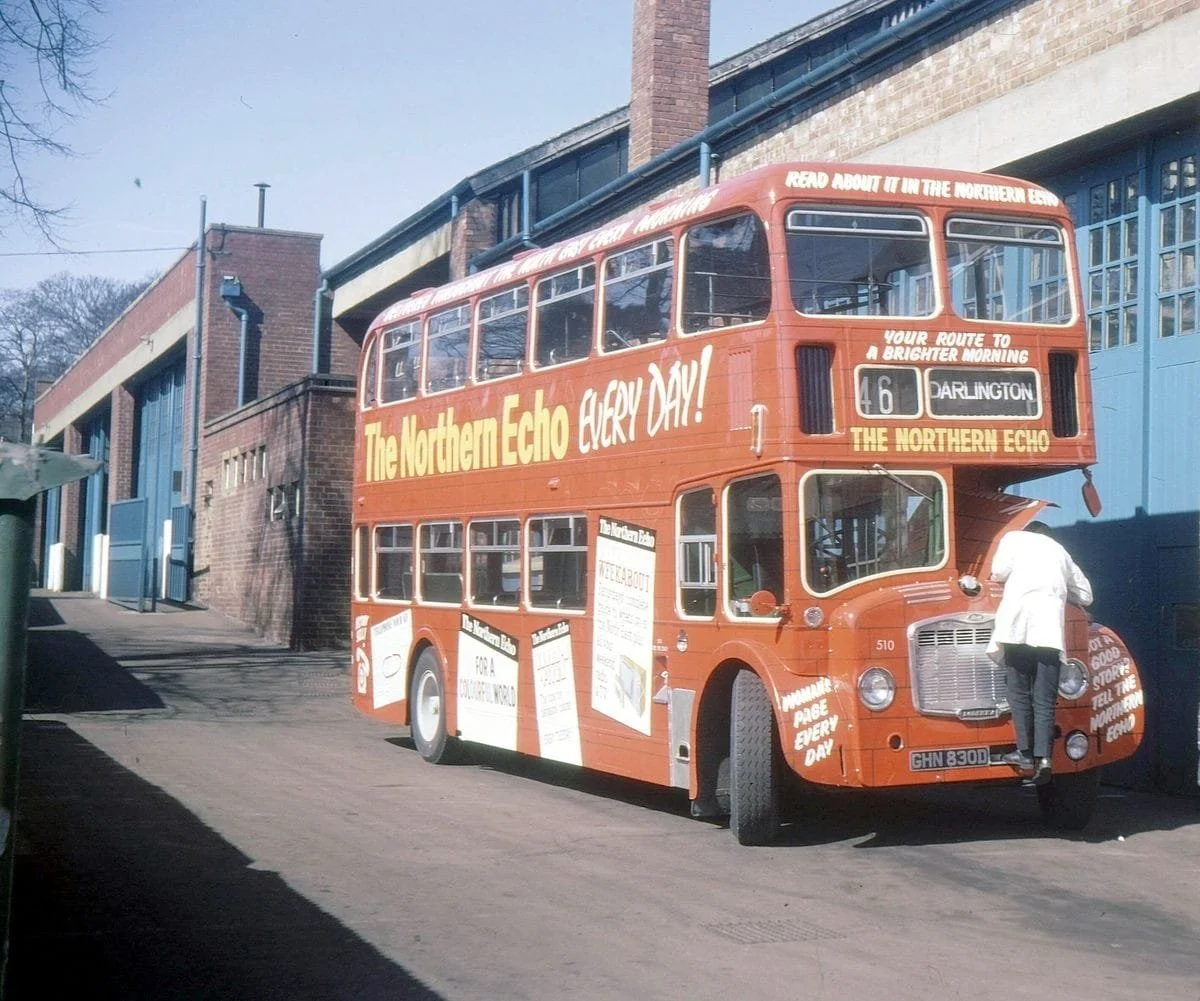
Moir Lockhead’s extraordinary career in public transport began in Darlington in the spring of 1960, when, at just 15 years old, he joined United as an apprentice fitter at the Central Workshops. Leaving school on a Friday, he was interviewed the very next day by workshop foreman Bill James and started work on the Monday, a moment that marked the beginning of a lifetime devoted to the bus industry.
Like all apprentices of the era, Moir received a thorough, hands-on education, rotating through different workshop departments once competency was proven. From the fuel injection room to engine overhauls, gearboxes, axles, and final installation into chassis and complete vehicles, the apprenticeship provided a deep understanding of vehicle engineering. During this period, both body-off chassis overhauls and combined chassis-and-body vehicles were common, often linked to Certificate of Fitness (COF) renewals, which initially occurred seven years from new and then at increasingly shorter intervals.
This rigorous training was shared by many apprentices and colleagues who passed through United at the same time, all shaped by the same exacting standards. One such apprentice was Peter Greenwell, who later became an engineer in the offshore oil industry, a powerful illustration of how United’s apprenticeship scheme instilled engineering quality and professionalism equal to the highest standards found in other sectors. Indeed, when the Cummins engine plant opened in Darlington, the American manufacturer attracted several former United apprentices, drawn by their reputation for skill, discipline, and engineering excellence developed at United.
As the company evolved, so did Moir’s career. When Bill James was promoted to Works Superintendent, Moir completed his apprenticeship and moved into a research and modification role under Peter Kipling. This work focused on improving vehicle reliability and passenger comfort, including experiments with exhaust brakes, boiler developments, and replacing air suspension with coil springs on Bristol Lodekkas – all undertaken well before the widespread adoption of transmission brakes or Webasto heaters.
Following Peter Kipling’s move to the Department of Transport as a vehicle examiner, Moir was promoted into his role, taking responsibility for research and development as well as vehicle testing prior to COF inspections. Alongside full-time work, apprentices were supported through day-release study at Darlington College of Technology, evening classes, and professional qualifications, with clear expectations to achieve City & Guilds finals and Membership of the IRTE. Apprenticeships lasted five years, and Moir’s promotion came shortly before his 21st birthday.
Equally significant was a personal milestone during his time at United: Moir met Audrey, who worked in the Works Office. They married in 1964, a relationship he describes as special and truly transformational. Today, Sir Moir and Lady Audrey live close to their children, grandchildren, and great-grandchildren in the North East of Scotland, a testament to a family life that has grown alongside a remarkable professional journey.
Moir later left United to join the Tarmac Group’s Econofreight as a management trainee before returning to the bus industry as Rollingstock Superintendent with Hartlepool Transport. Notably, Hartlepool was one of the few municipal operators to purchase Bristol RE chassis with ECW bodies – vehicles that echoed the engineering principles Moir had grown up with at United.
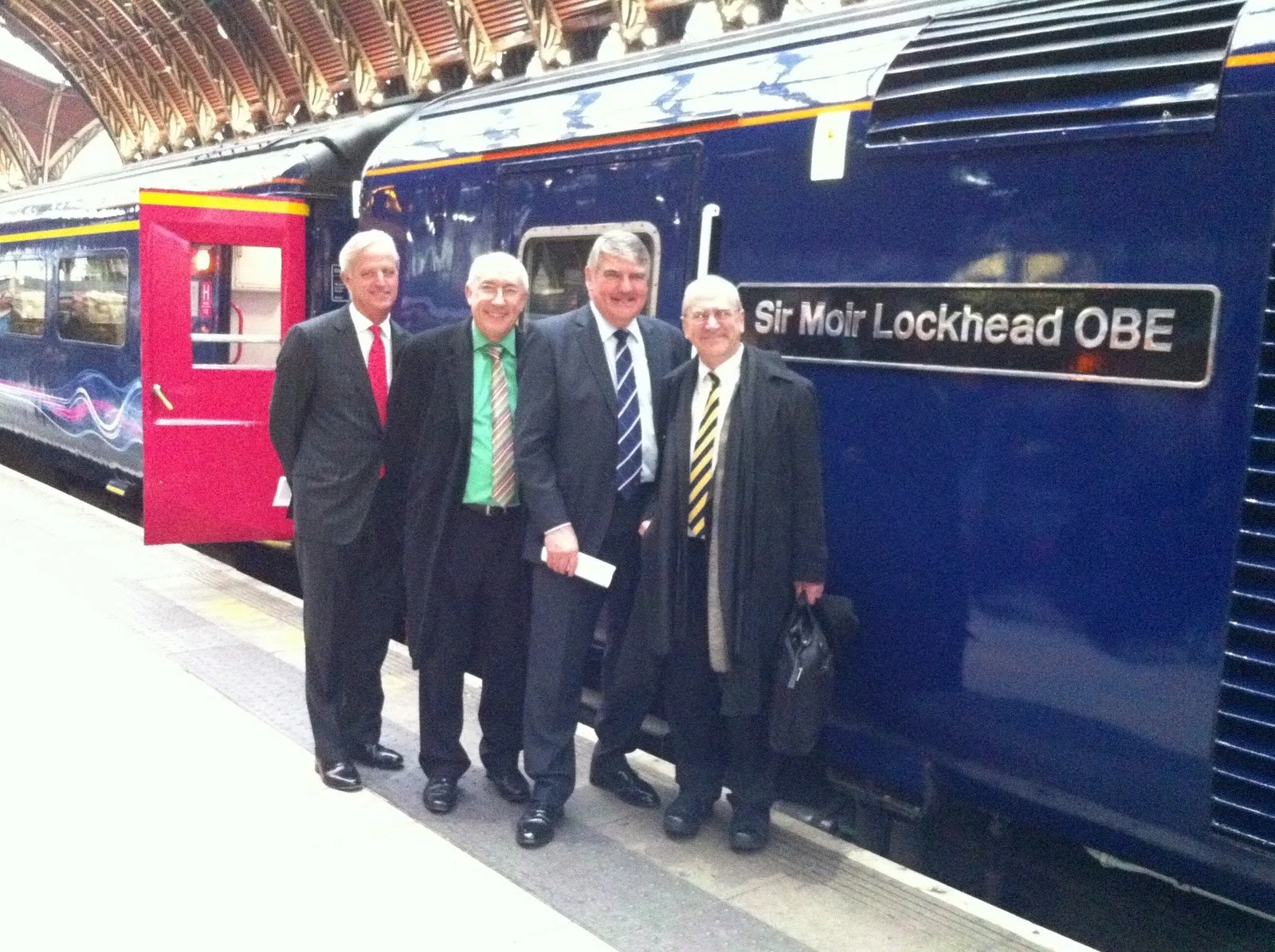
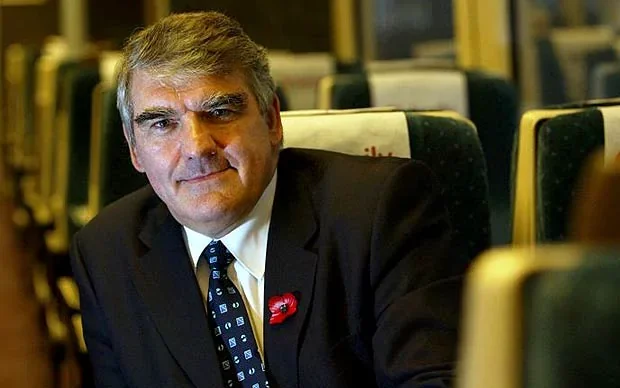
His career ultimately spanned the very highest levels of public transport leadership, culminating in his retirement as Chief Executive Officer of FirstGroup PLC in 2011.
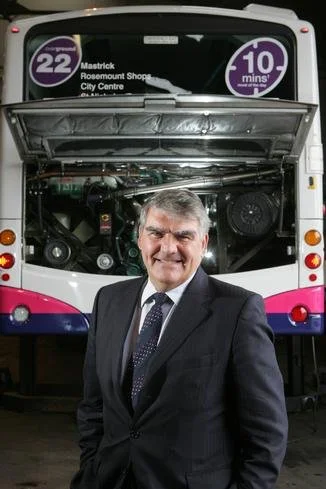
In recognition of his outstanding services to the bus industry and public transport, he was awarded an OBE and, in 2008, received a Knighthood.
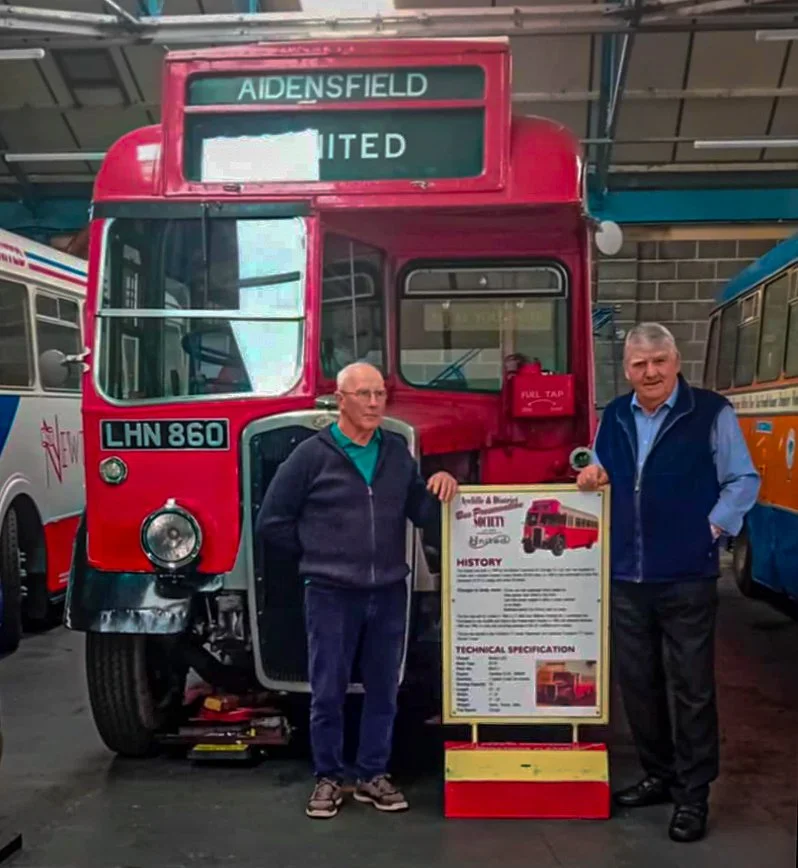
Sir Moir remains clear that it all began at United in Darlington, shaped by early mentors such as Bill James, Peter Kipling, Bob Farnaby, and many others whose guidance and professionalism laid the foundations for his success. Their influence, and the culture of learning, craftsmanship, and excellence at United, continue to resonate through the history preserved here at Aycliffe Bus Museum.