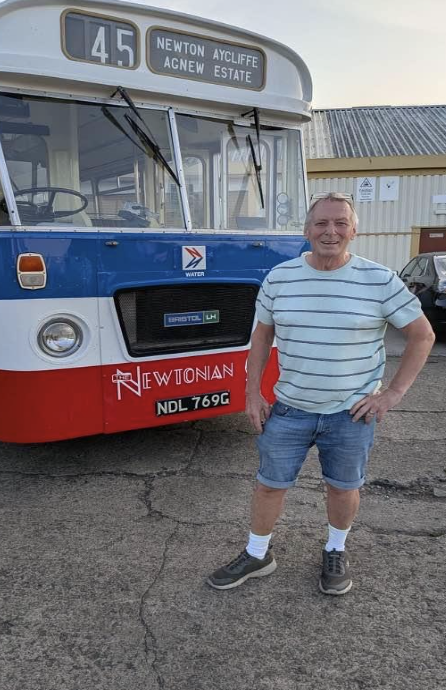
Museum Topics: Life Behind the wheel of the newtonian with malcom dobson
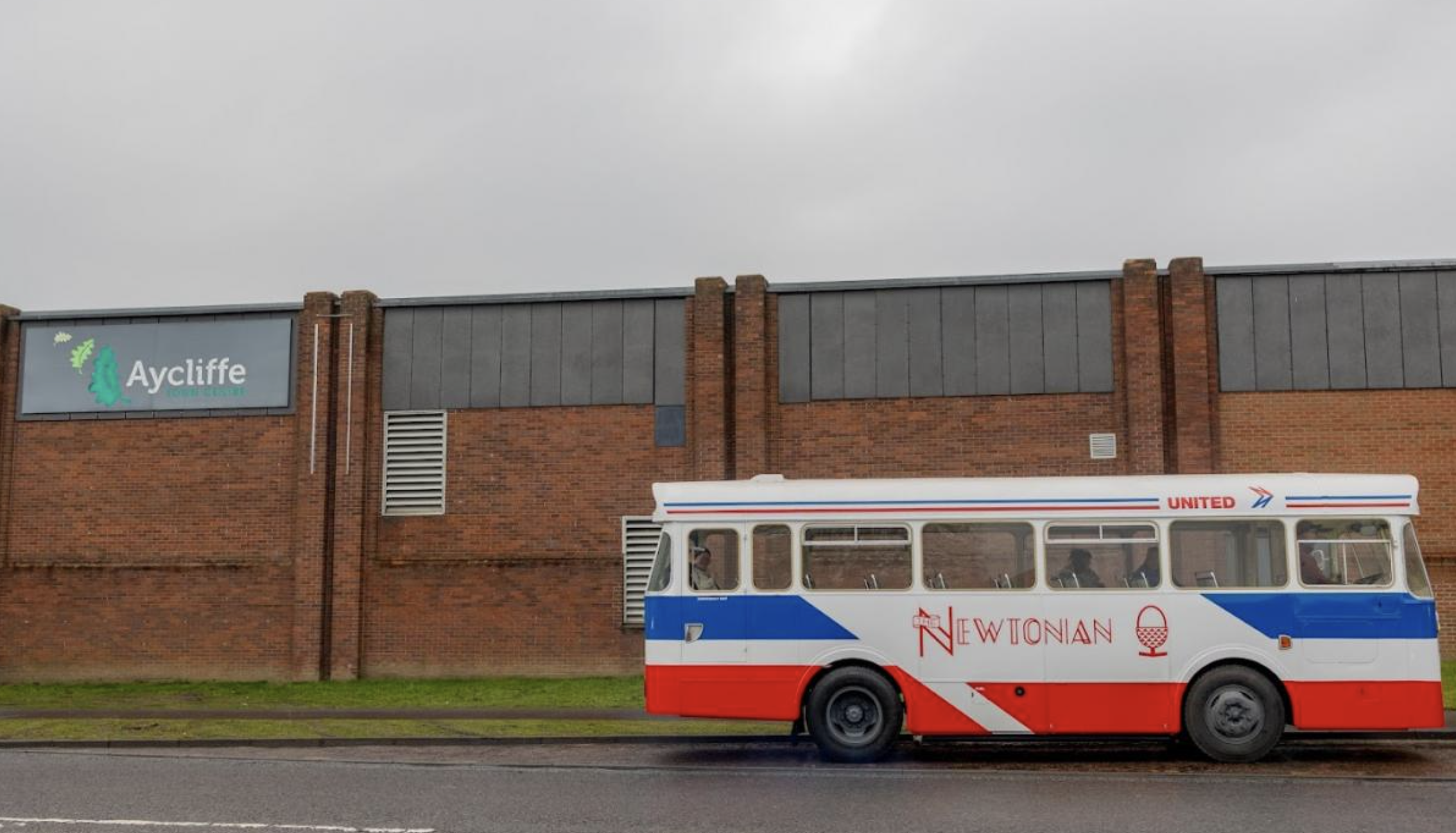
Museum Topics:
Life Behind the wheel of the newtonian with malcom dobson
There was a time when the rhythm of daily life in Newton Aycliffe could be measured by the arrival of a bus in white, red and blue. It appeared in all weathers, morning after morning, evening after evening, linking streets, neighbours and generations.
For Malcolm Dobson, that bus was more than a memory from the pavement. It was his office, his responsibility and, in many ways, part of his family.
Malcolm joined United Automobile Services in 1977. He stepped into a world where duty cards ruled your week, tea tasted better from a depot mug and earning your place behind the wheel meant graft.
“I was looking for work,” he remembers, “and my father in law, Stanley Cooper, was already driving for United. I asked if there were any jobs going and, through the right people, I got in.”
He began as a conductor, learning the passengers, the routes and the expectations of the job from the platform up. When one man operation arrived, the satchel gave way to the steering wheel, and Malcolm went into training for his PSV licence.
It was a different era of driving. Strength mattered.
“We learned in half cab double deckers,” he says. “They were heavy to steer and very physical. You knew you had done a day’s work when you finished.”
Shifts were long and varied. Newcastle meant mileage and endurance. Winter meant uncertainty. Overtime was there if you wanted it, and many did. Yet for all the miles Malcolm covered across the North East, Durham, Barnard Castle, Middlesbrough, Redcar, Saltburn and Darlington, one set of duties would stay with him forever.
The Newtonian.
He shared the work with Stanley and with his brother in law Peter, although opposite turns meant family meetings were usually limited to a wave in passing. His usual companion on the route was a Bristol LH, one of four that became woven into the town’s identity.
The museum’s own NDL 769G began life far from County Durham with Southern Vectis, wearing red before gaining the familiar local colours that residents still picture today.
They were sturdy, straightforward buses, but they demanded effort and respect.
“It was manual, you double clutched, the steering was heavy and the gearstick could be awkward,” Malcolm says, the memory clearly still vivid. “But it was enjoyable. I have very fond memories of driving that bus.”
Because the route circled the town, it also circled his life. Malcolm lived at Bluebell Meadow, and the rare luxury of passing your own front door in service was never lost on him.
“I would call home at lunchtime, have my dinner, then go back out,” he recalls.
When his son Gavin was small, those moments became something even more valuable than convenience. A wave from the cab, a quick glimpse of dad at work, a bus that seemed impossibly big when you were little. Looking back, Malcolm suspects the spark was lit right there.
“I think that is where Gavin’s obsession with buses started.”
The job created memories that still raise a smile. Advice from Peter about lifting himself off the seat over the humps on Greenfield Way sounded sensible enough at the time.
“So I built up speed and lifted myself up,” Malcolm laughs, “and hit my head on the locker above me. It really hurt. I blame Peter!”
Yet beyond the jokes sits something deeper, a reminder of how closely driver and community were once connected.
“People were friendly,” he says. “They appreciated the service. Having a bus just for Newton Aycliffe meant a lot.”
Like many drivers, Malcolm had his favourites in the fleet. The Leyland National Mark 2 stood out as modern, comfortable and forgiving after the physicality of earlier machines. Over the years he also took charge of Bristol VRs, Leyland Olympians and Leyland Tigers, each bringing its own character to the working day.
Not every shift was straightforward. Snow could mean a shovel on board and slow, determined progress towards places like Barnard Castle. Buses ran because they were expected to run. That was the culture.
And then there were the late turns.
One evening, arriving in Darlington, Malcolm discovered two passengers fast asleep upstairs and entirely unwilling to move. With the depot calling, he carried on back, opened the windows near them and sent the vehicle into the wash.
“The shouting when the water hit them,” he grins, “I can still hear it now. They came down the stairs absolutely soaked.”
Ask him today what it meant to be a Newtonian driver and the answer comes quickly.
“You were part of local history,” he says. “You met people every day. You watched the town grow. Whether it was a run to Barnard Castle with the countryside opening up in front of you or heading for Newcastle on the 722 and 723, they were good days.
I will never forget my time at United.”
And perhaps that is why these stories matter. They are not only about buses. They are about pride, routine, laughter, family and the quiet reliability that helped build a community.
Our sincere thanks go to Malcolm for entrusting us with his memories and allowing future generations to travel those roads once more, if only in their imagination.