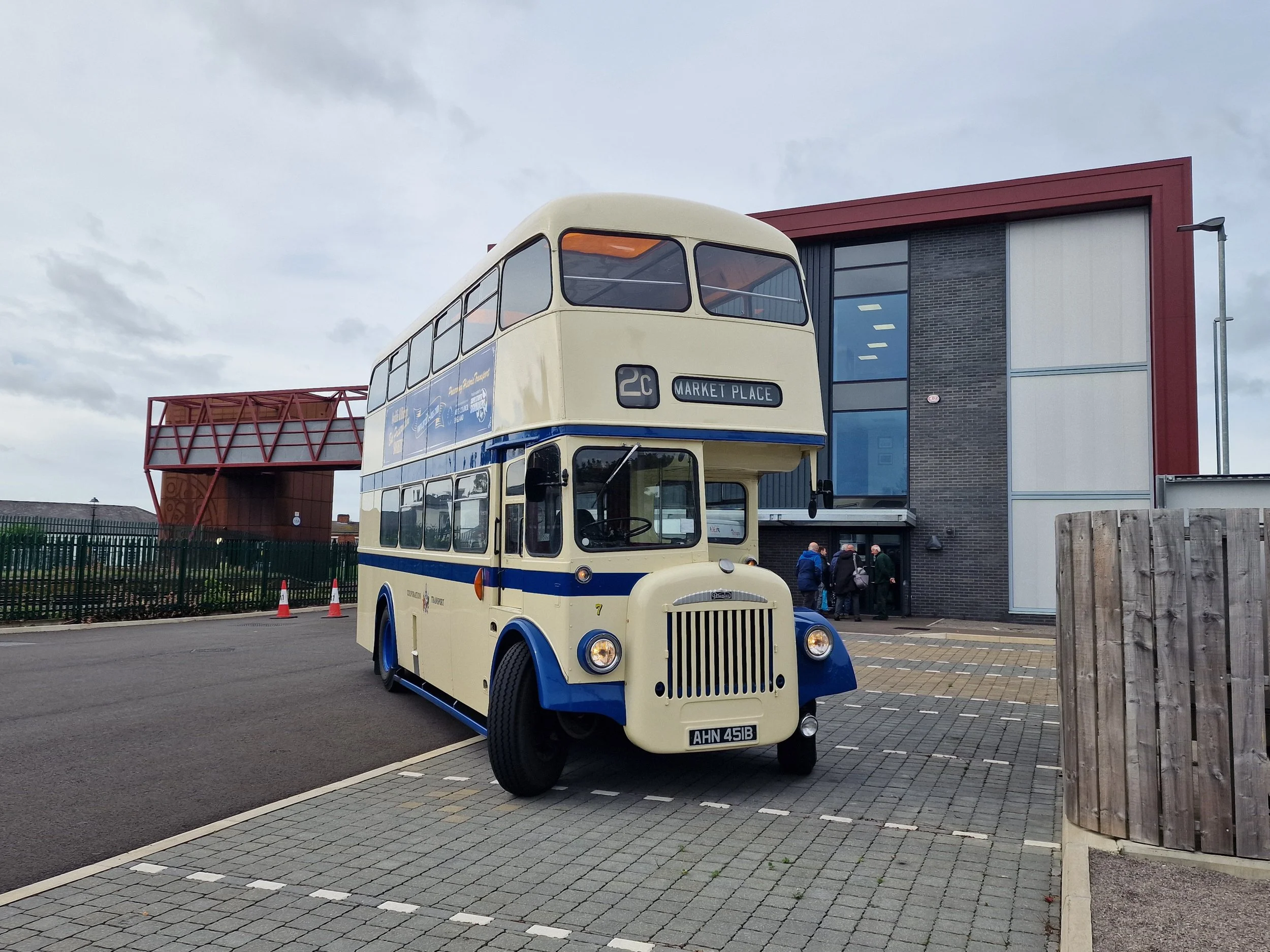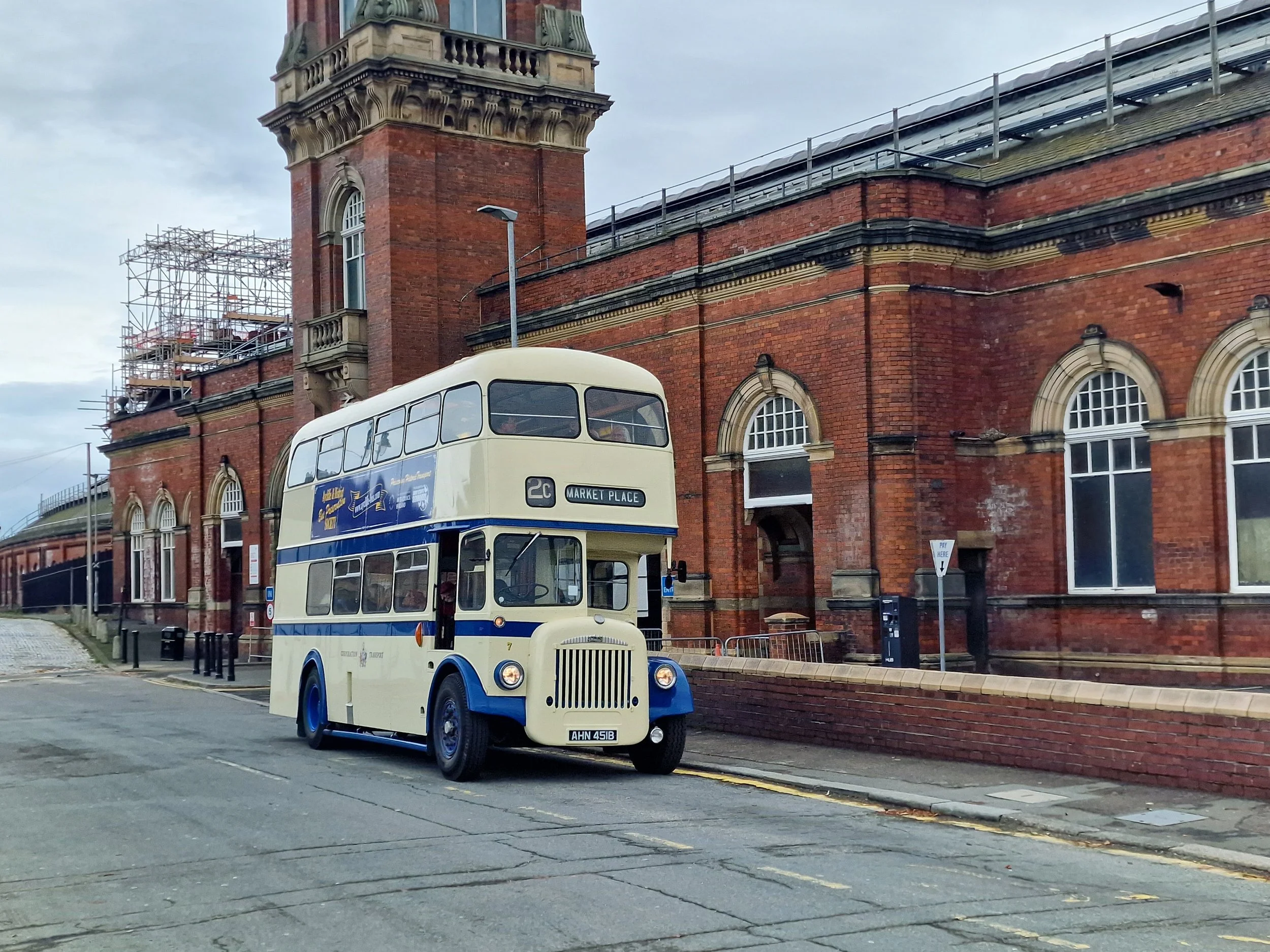
Daimler - AHN 451b
Darlington’s iconic number 7 bus – a remarkable example of mid-20th-century British transport engineering.
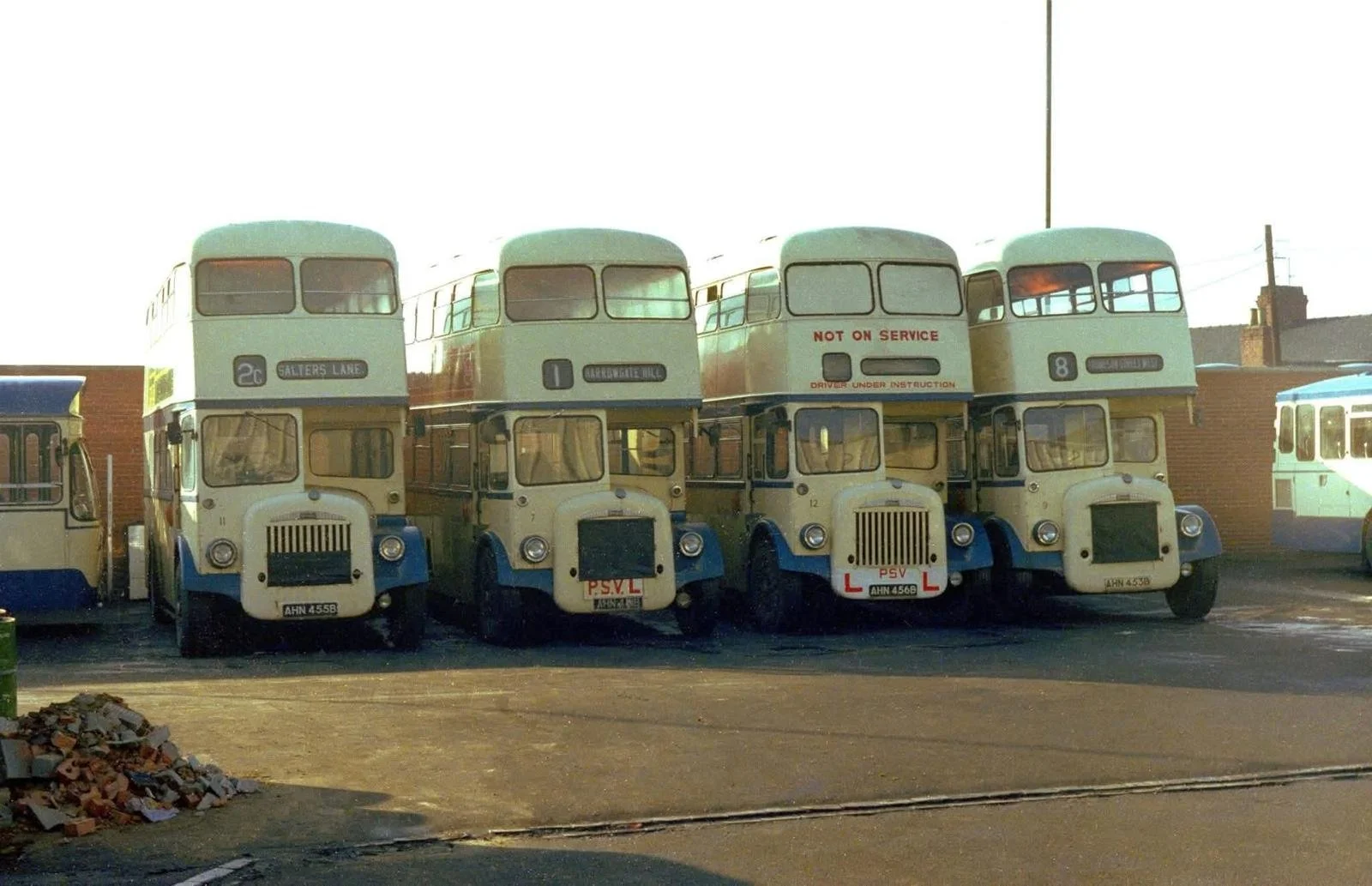
Delivered in 1964, this Daimler CCG5 double-decker was one of a dozen buses purchased by the Darlington Corporation, marking an important chapter in the town’s public transport history. Today, this preserved vehicle offers a tangible link to the era of the half-cab, open-platform double-decker, a design that is now a beloved icon of British bus heritage.
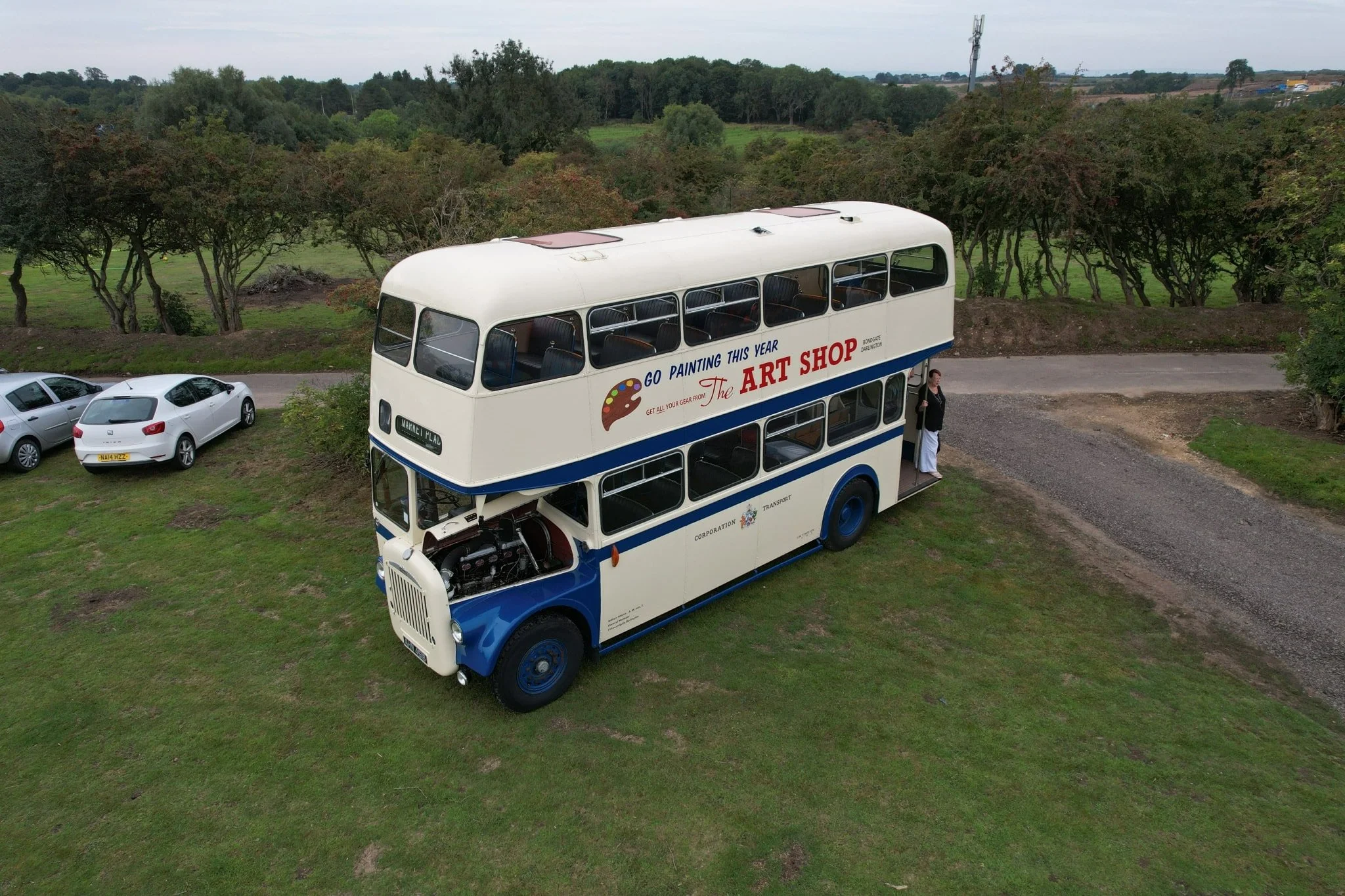
The Daimler CCG5 features a conventional chassis with a separate, built-on double-deck body, reflecting the standard construction method of the time. The chassis was manufactured by Daimler, with the type designation CCG5. In post-war Daimler nomenclature, all models began with a “C,” followed typically by a “V” to indicate a front-engine, epicyclic gearbox configuration without a manual clutch. In the case of the CCG5, however, the second “C” signifies a significant variation: the bus was fitted with a Guy drive-line, incorporating a manual clutch and a four-speed constant-mesh gearbox. This feature became available after Daimler and Guy were incorporated into the Jaguar group, allowing such cross-brand engineering.
The final two characters of the model code – “G5” – identify the engine make and type. Number 7 is powered by a Gardner 5-cylinder 7.0-litre diesel engine. By 1964, this was unusual; most post-war buses were moving toward larger engines. For comparison, the famous London Routemaster used a 9.6-litre engine, and Daimler’s standard by this period was the Gardner 6-cylinder (8.4-litre) engine. Despite its relatively modest power output of 94 bhp at 1,700 rpm, the CCG5’s performance, limited to 38 mph (61 kph), was ideal for urban routes like those in Darlington. Driving the vehicle, however, would have been physically demanding, lacking both power-assisted steering and synchronised gears. The modest engine and slow gear changes made hill climbing a challenge, though Darlington’s gentle terrain mitigated this limitation.
The bus body was crafted by Charles H. Roe of Leeds, following their standard double-deck design with an open rear platform. Seating capacity was 61, slightly below the contemporary norm of 63–65 seats, providing passengers with extra legroom and reducing the strain on the engine. The interior includes a high step from the rear platform to the lower saloon to clear the transmission and rear axle. While this design falls short of modern accessibility standards, it was typical of its era.
The open rear platform design also dictated a two-person crew: a driver and a conductor. The conductor’s duties included supervising the platform and circulating throughout both decks to collect fares and issue tickets. Communication between driver and conductor was limited to a bell signal, reflecting the simplicity – and charm – of bus operations during that period.
Darlington’s number 7 remained in regular service until 1980, when it was replaced by modern single-decker buses. While most of the original batch was sold at auction, number 7 was retained temporarily before being sold in January 1981 to a London-based busman’s kidney machine appeal, which raised over £10,000.
The bus was purchased by the Society in May 1981, with generous support from local businesses, and underwent a meticulous 15-month restoration to return it to its original livery. Today, it stands as a celebrated example of the end of the half-cab double-decker era. Its two-person crew configuration, open rear platform, and classic styling make it a favorite at rallies and events, consistently drawing crowds and remaining “well laden” whenever it enters service.
Number 7 is not just a preserved vehicle; it is a living piece of Darlington’s transport heritage, reminding us of an era when public buses were both a functional necessity and a community icon. Visitors are always welcome to experience a ride aboard this historic double-decker, connecting the past and present in a uniquely British way.