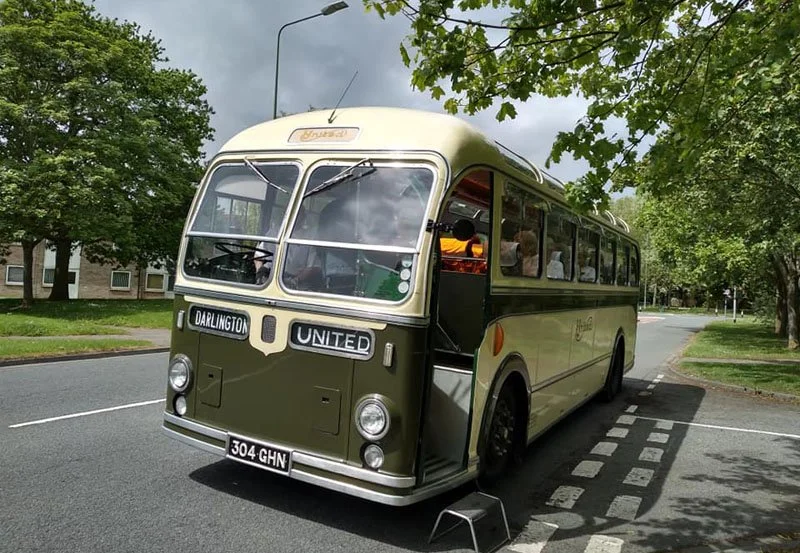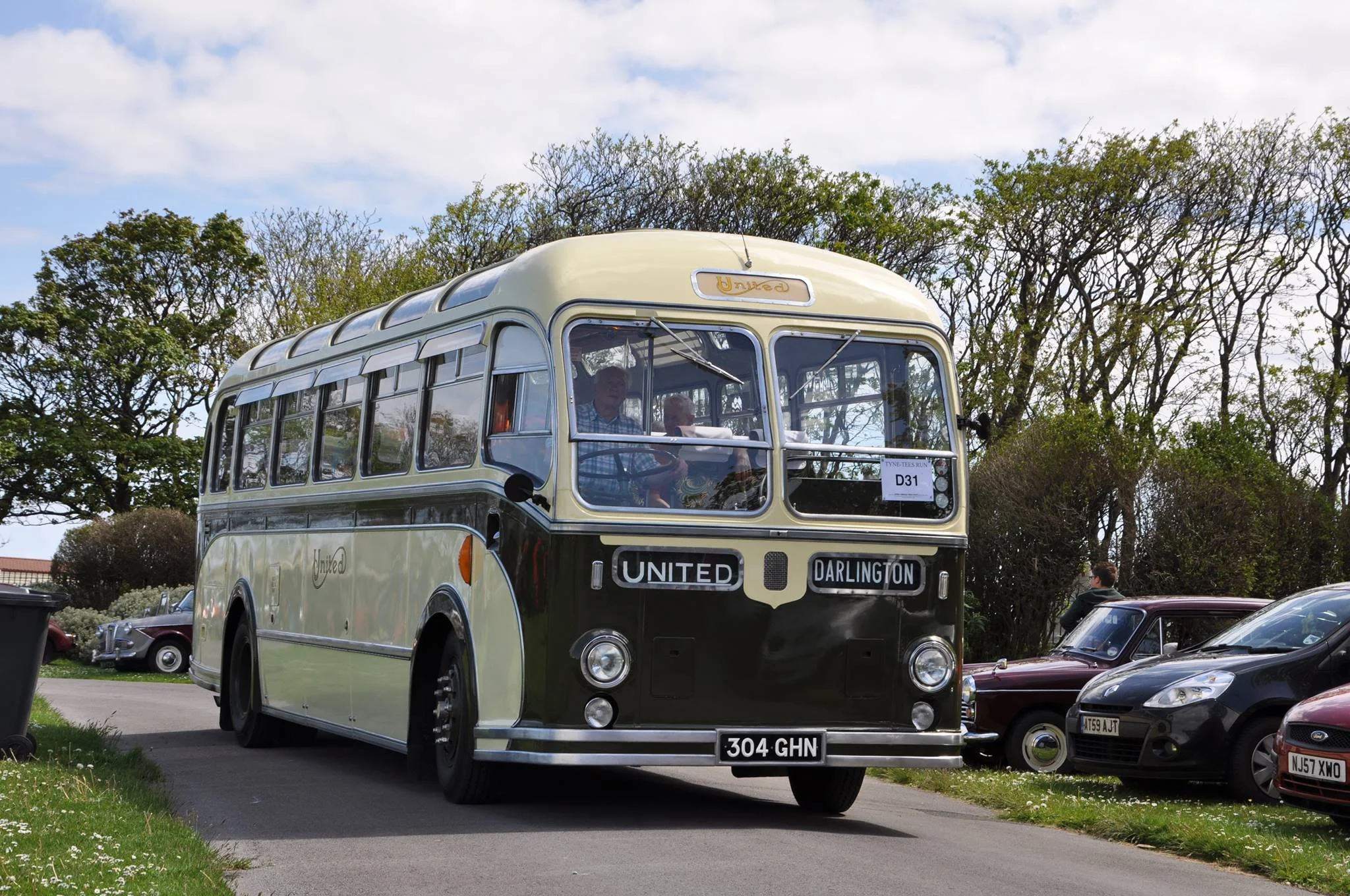
Bristol LS6G - 304 GHN
Reflecting the Tyne-Tees-Thames express services’ brand identity 304 GHN is a proud example of Uniteds prestigious work.
304 GHN, was delivered to United Automobile Services on 1st June 1958, during a period of significant innovation in British coach design. She was equipped with a horizontal six-cylinder Gardner diesel engine, mounted amidships under the floor—a layout that would later be widely adopted by other manufacturers due to its efficiency and balance. The coach also featured integral bodywork, a design in which the body and chassis are constructed as a single unit to reduce weight and improve structural strength, a forward-thinking concept at the time. This combination of advanced engineering and practical design made 304 GHN an exceptional example of late 1950s coach technology.
Originally, 304 GHN was fitted with 34 reclining seats, allowing passengers to travel in comfort on longer journeys. She was primarily used on United’s prestigious week-long tours to Scotland, Ireland, and the West Country. These tours were among the most exclusive offered by United, requiring reliable and comfortable vehicles capable of handling extended distances with minimal downtime. In 1961, the seating layout was altered to 39 fixed seats, reflecting a change in operational use. She then became a versatile vehicle for day trips from Scarborough while still occasionally being used for long-distance excursions.
The coach was finished in United’s distinctive olive green and cream livery, reflecting the Tyne-Tees-Thames express services’ brand identity. This attractive color scheme helped establish a sense of prestige and recognizability for passengers and passersby alike. 304 GHN continued to serve United reliably until 1970, when she was withdrawn from their fleet and sold to Morris Bros of Swansea, marking the start of a new chapter in her operational life.
After withdrawal by Morris Bros in 1974, 304 GHN passed to an operator in Newquay, where she was upgraded with a Gardner 6HLW engine, further enhancing her performance and longevity. Over the following years, she experienced several changes in ownership and was eventually laid up, remaining out of service for an extended period.
In 2000, the Aycliffe Bus Museum Society began a lengthy restoration of the vehicle, dedicating significant time and effort to return her to her former glory. Years later, 304 GHN resurfaced for public appearances, rekindling interest among enthusiasts. However, on her initial outing following restoration, the coach’s engine unfortunately failed, necessitating a complete overhaul. Once repaired, she returned to service and spent many years operating on the local rally scene, where she became a familiar and beloved sight at events. Her presence not only showcased historic coach engineering but also provided an opportunity for enthusiasts and the public to experience a piece of mid-20th-century travel heritage in action.
Today, 304 GHN stands as a testament to careful engineering, thoughtful design, and the dedication of preservationists, offering a living link to the golden age of British coach travel.