
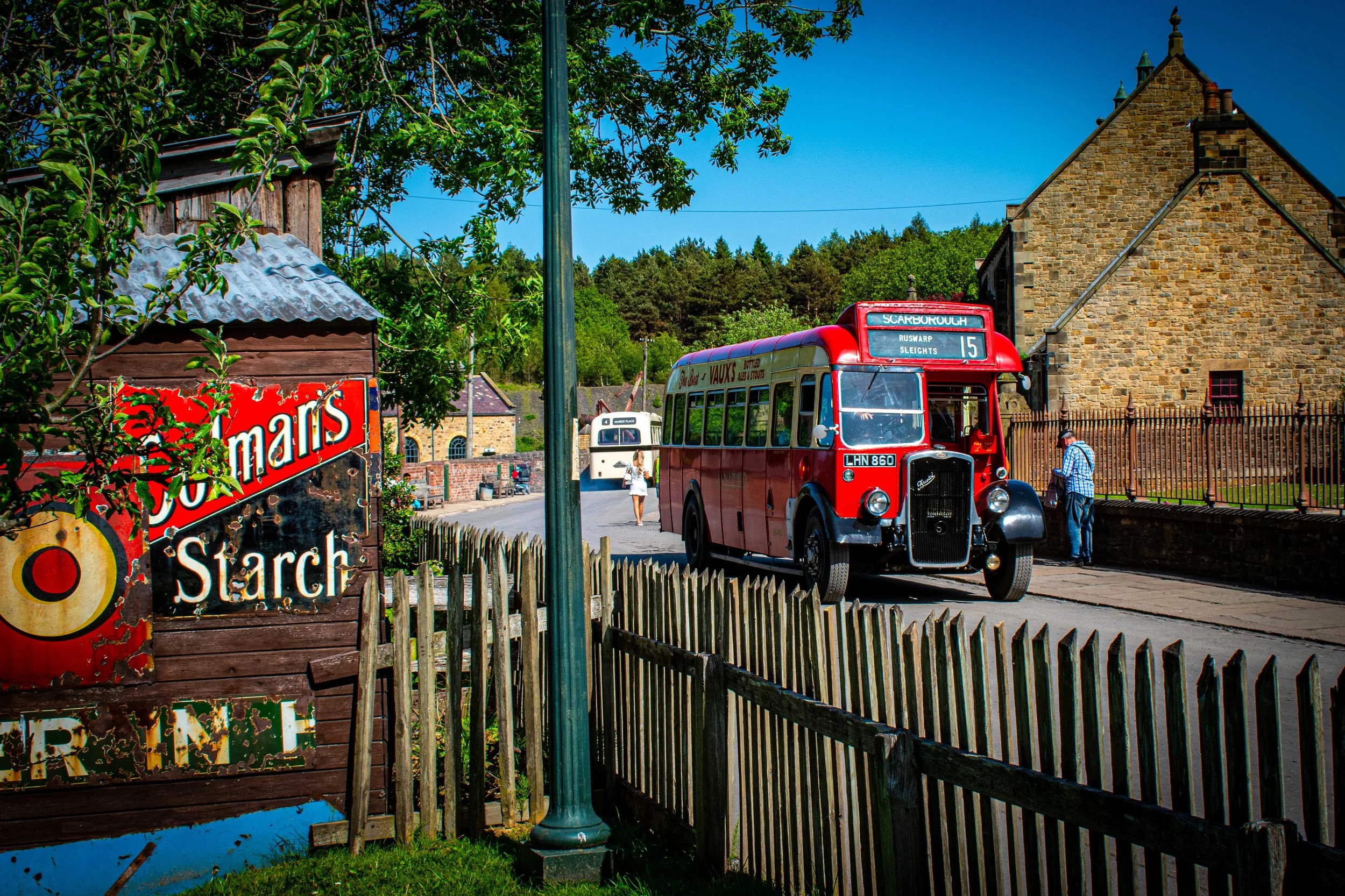
Bristol L - LHN 860
LHN 860 is a unique, restored 1949 Bristol bus, the only surviving O.M.O. conversion, preserved by Aycliffe Bus Preservation Society.
LHN 860 is a rare and historically significant single-deck bus that has earned its place in preservation through a combination of thoughtful engineering, wartime resilience, and decades of dedicated restoration. Built in 1949, the bus represents a classic example of British post-war bus design and adaptation to the changing needs of the industry.
The chassis was constructed by the Bristol Tramways & Carriage Company Ltd., a key manufacturer in the UK bus industry during the mid-20th century. It was delivered to United Automobile Services later that year and fitted with a standard single-deck body built by Eastern Coach Works (ECW) of Lowestoft. At the time, this configuration was typical for rural and interurban routes, offering durability, simplicity, and efficiency in operation.
In 1960, LHN 860 underwent significant modification as part of a wider programme by United to convert a number of its single-deck fleet to One Man Operation (O.M.O.). This was in response to economic pressures and a growing shortage of bus conductors. Around 30 vehicles, including LHN 860, were adapted to allow the driver to manage fare collection and door operation.
The conversion involved several structural and practical changes to the bus:
The original driver’s and rear passenger doors were sealed up.
A powered entrance door was installed at the front to enable passenger entry and exit directly beside the driver.
The cab side screen was angled to allow the installation of a ticket machine, within the driver’s easy reach.
The bulkhead behind the driver’s seat was partially removed to improve visibility and communication with boarding passengers.
These modifications were innovative at the time and helped to extend the operational life of the vehicles. However, as vehicle design moved forward, the majority of these converted buses were eventually withdrawn and scrapped. LHN 860 is now believed to be the only surviving example of the 30 O.M.O.-converted vehicles, making it a unique and irreplaceable piece of transport history.
After six more years in service, the bus was sold by United in 1966 to J.T. Bell, a private firm that would later become Bellway Homes. It was used as a workmen’s bus, transporting site workers between accommodation and construction sites – a common second life for many buses at the time.
In 1983, LHN 860 was purchased by the Aycliffe and District Bus Preservation Society, recognising its historical importance and potential for restoration. The vehicle underwent a comprehensive and painstaking restoration between 1989 and 1996, returning it to its post-conversion appearance as a 1960s-era O.M.O. bus. The restoration preserved the unique modifications while ensuring mechanical reliability and period accuracy.
LHN 860 has since become a well-known sight at heritage events and has also enjoyed a career on screen. It has featured in the Yorkshire Television series Heartbeat, as well as in the Catherine Cookson TV drama The Round Tower, where its period-correct appearance added authenticity to the productions.
Today, LHN 860 continues to be maintained and operated by the Aycliffe and District Bus Preservation Society, serving as a reminder of how the bus industry adapted to economic and operational challenges in the mid-20th century. Its survival is a testament to the efforts of those committed to preserving Britain's public transport heritage.
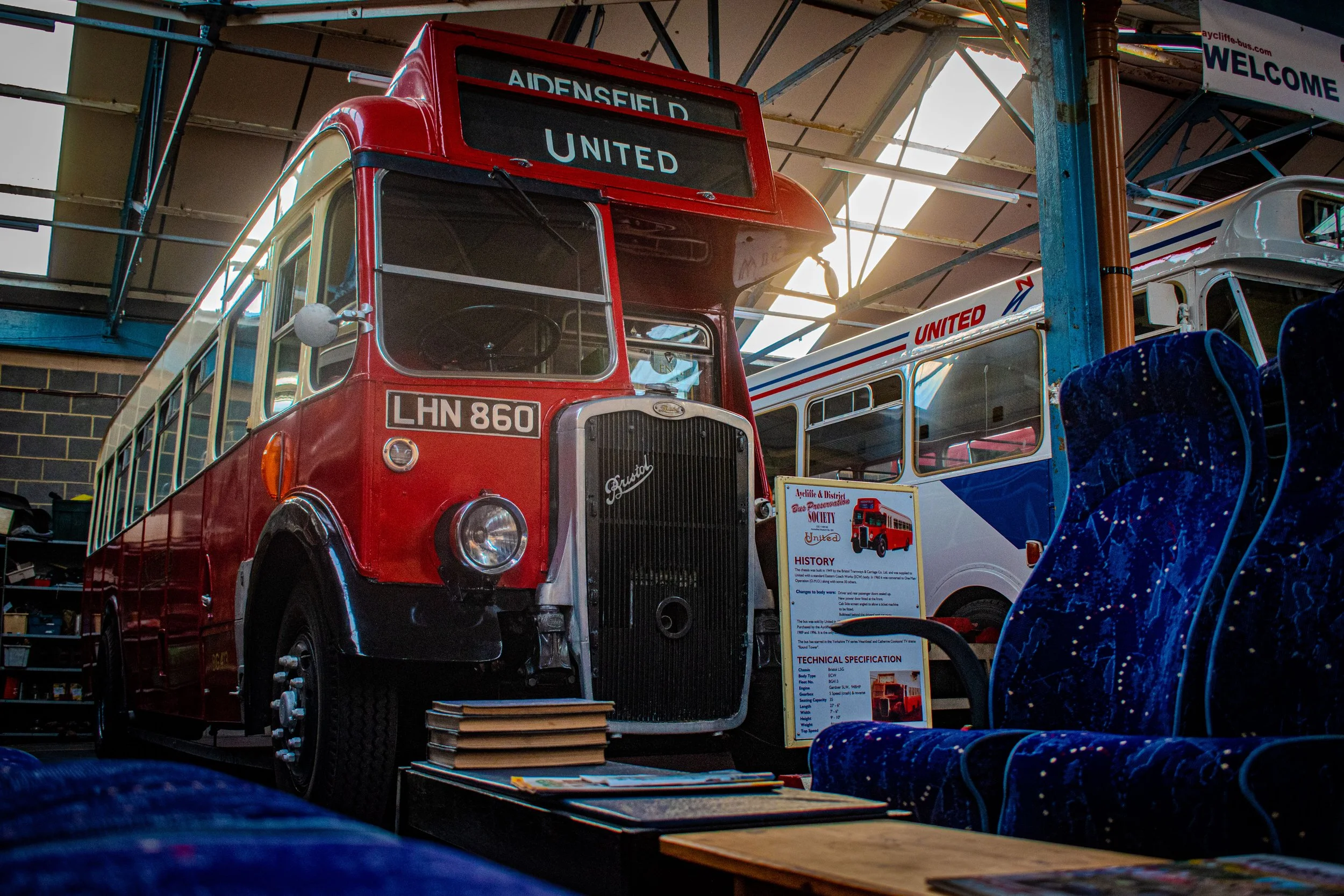
Technical Specification – LHN 860 (Bristol L5G)
Chassis: Bristol L5G
Body Type: Eastern Coach Works (ECW)
Fleet Number: BG413
Engine: Gardner 5LW, 94 bhp
Gearbox: 5-speed crash gearbox with reverse
Seating Capacity: 35 passengers
Length: 27 ft 6 in (8.34 m)
Width: 7 ft 6 in (2.29 m)
Height: 9 ft 10 in (3.00 m)
Weight: 6 tons 9 cwt 56 lbs
Top Speed: 52 mph