
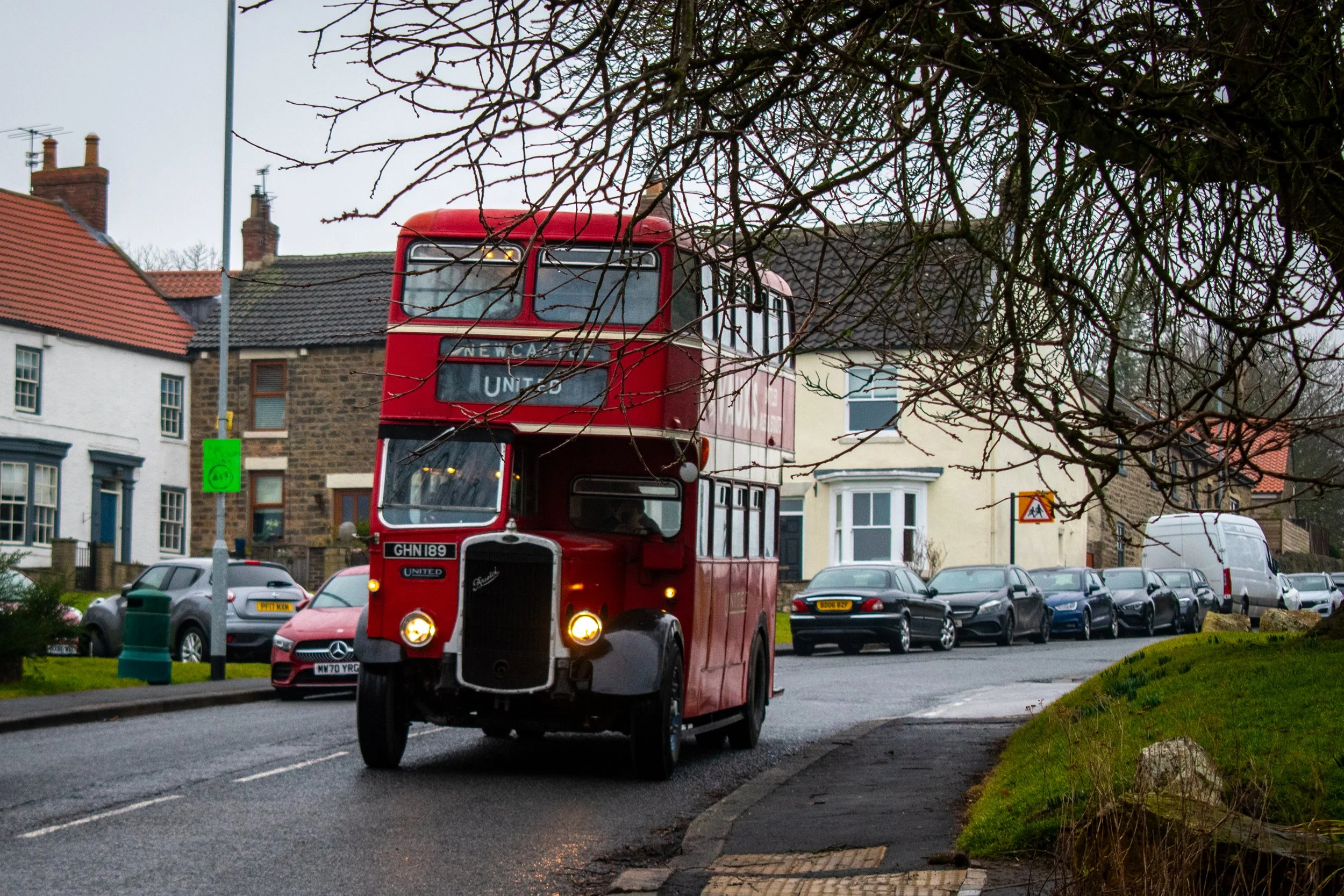
Bristol K Type - GHN 189
GHN 189, the oldest surviving United double-decker, has been preserved since 1970 and remains operational thanks to ongoing restoration.
The story of GHN 189 is one of exceptional survival, resilience, and enduring historical value. As the oldest known surviving double-decker bus to have operated with United Automobile Services, it holds a unique place in Britain’s transport heritage. Its existence offers a rare insight into the design, engineering, and operational challenges of wartime and post-war public transport in the UK.
GHN 189 began life during one of the most turbulent periods in modern history. Its chassis was assembled in 1942 by the Bristol Tramways & Carriage Company (later Bristol Commercial Vehicles), using parts produced before the company was fully directed towards war production under government order. During the Second World War, civilian vehicle production was heavily curtailed, and what was manufactured was subject to strict wartime regulations. As such, GHN 189 was initially fitted with a basic, utilitarian body constructed by Northern Counties, designed for function rather than aesthetics.
The bus was registered on 10 August 1942 under the mark GHN 189 and assigned the fleet number BDO29. This changed to BGL 29 on 1 May 1951 during a company-wide renumbering scheme adopted by United to bring greater consistency to its growing fleet.
A significant transformation took place in 1954 when the vehicle was re-bodied. The original utility body was replaced with a more robust and refined lowbridge design built by Eastern Coach Works of Lowestoft. Interestingly, this body was originally constructed in 1949 for a Leyland Titan TD2, but was later transferred and fitted to GHN 189. This form of rebodying was not uncommon in the post-war era, as bus companies looked to extend the service life of reliable chassis by fitting them with newer or better-conditioned bodies.
Following 17 years of front-line service with United, GHN 189 was withdrawn in early 1959 and sold to Silcox Motor Coach Company, a long-established operator based in Pembroke Dock, South Wales. There, the bus continued to work local and regional services until its eventual retirement from active service in November 1969. By then, buses of its type and vintage were becoming increasingly rare, with most having been scrapped or long since replaced.
Fortunately, GHN 189 was spared that fate. In 1970, it was purchased by the Reverend Phillip Battersby, an early and enthusiastic supporter of vehicle preservation. Reverend Battersby recognised its historical significance and took initial steps to ensure it was preserved for future generations. His early care laid the groundwork for its continued survival.
In 1981, ownership of the vehicle was transferred to the Aycliffe and District Bus Preservation Society. The Society took on the responsibility of maintaining and restoring GHN 189 and has since carried out significant work to ensure it remains roadworthy and presentable. During the mid-1980s, a major phase of restoration was undertaken. More recently, new rear springs were fitted and oil seals on the back axle were replaced to address wear and age-related issues.
While GHN 189 remains operational, its continued use depends on further restoration. Substantial bodywork repairs and engine refurbishment will be needed to guarantee another decade of active life. The Society remains committed to ensuring this unique piece of transport history remains both a static and mobile exhibit, bringing the past to life for future generations.
GHN 189 is not just a relic of the past; it has also gained some modern cultural recognition. It has featured in episodes of the popular Yorkshire Television period drama Heartbeat, where its authentic appearance has helped recreate scenes from Britain’s post-war years. It is often seen alongside its stablemate, the single-deck L-type bus LHN 860, also preserved by the Society.
GHN 189 stands today not just as a preserved vehicle, but as a symbol of wartime ingenuity, post-war recovery, and the dedication of enthusiasts determined to keep history alive.
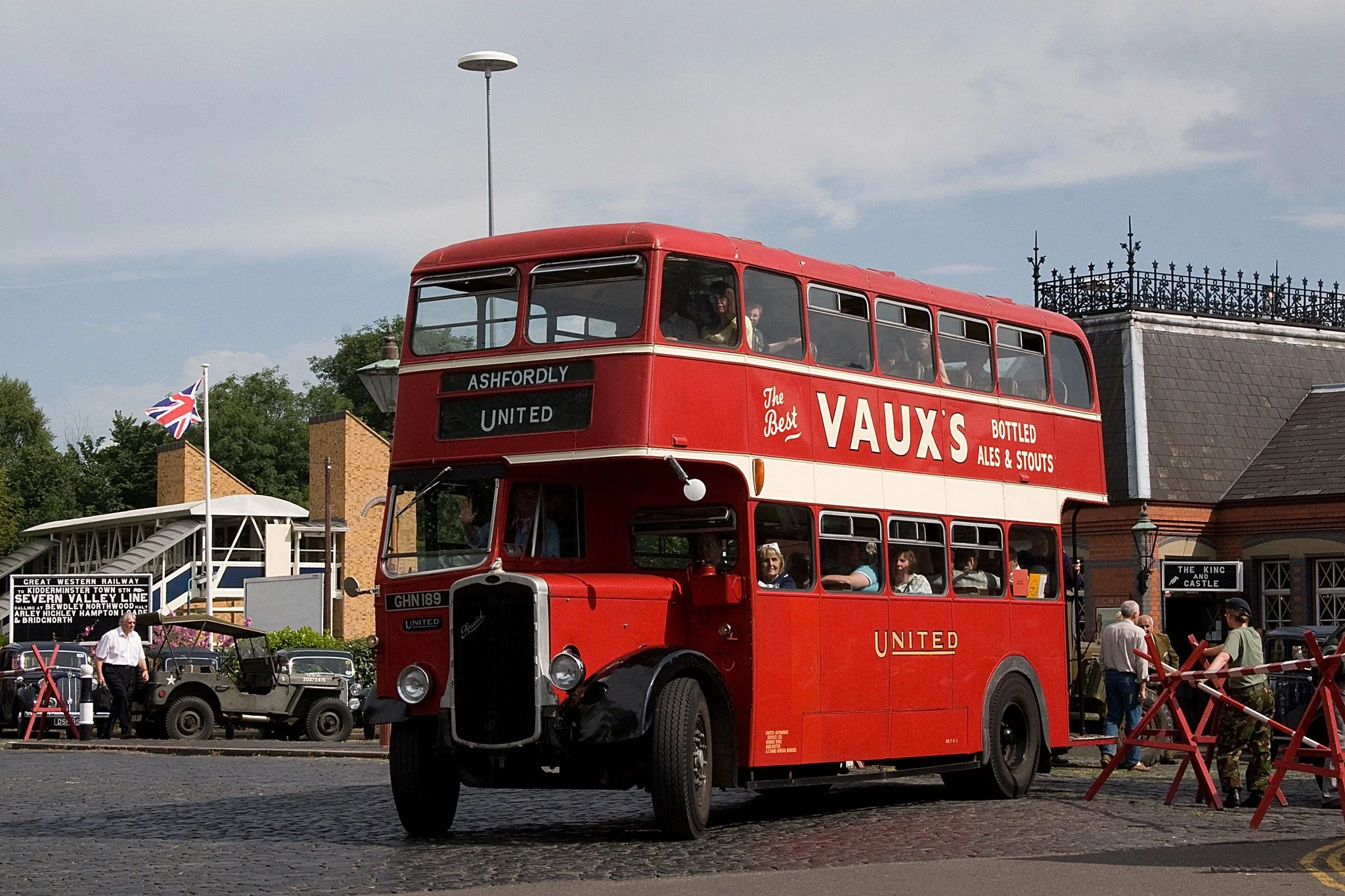
Technical Specification – GHN 189 (Bristol K5G)
Chassis
Built by Bristol Tramways & Carriage Co. Ltd
Type: K5G
Engine
Manufacturer: Gardner
Model: 5LW, 5-cylinder diesel
Displacement: 7.0 litres
Power Output: 94 bhp (70.1 kW) @ 1700 rpm
Mounting: Bolted directly to the chassis
Cooling System: Unpressurised water-cooled, no fan assistance
Gearbox & Transmission
Type: 4-speed crash gearbox with reverse
Features: No synchromesh, with clutch brake
Final Drive: Underslung worm-drive rear axle
Performance
Maximum Speed: 38 mph (61.2 km/h)
Fuel Consumption:
Urban: 12 mpg (4.3 km/l)
Distance work: 20 mpg (7.1 km/l)
Weight
7 tons 6 cwt 2 qtr (7.325 tonnes)
Dimensions
Length: 26 ft (7.92 m)
Width: 7 ft 6 in (2.13 m)
Height: 13 ft 5 in (4.09 m)
Seating Capacity
Total: 53 passengers
Upper Saloon: 27
Lower Saloon: 26
Electrical System
Voltage: 12 volts
Braking System
Type: Vacuum-assisted triple servo
Current Body
Construction: Composite steel and wood-framed lowbridge body
Built by: Eastern Coach Works, Lowestoft
Year Built: 1949 (originally for a Leyland Titan TD2)
Fitted to GHN 189 in 1954